Buy in.co.at ?
We are moving the project
in.co.at .
Are you interested in purchasing the domain
in.co.at ?
domain@kv-gmbh.de · 0541-91531010
Buy in.co.at ?
What do you think of Monti Wolf?
Monti Wolf is a talented musician with a unique style and a strong stage presence. His ability to blend different genres of music and create a captivating performance is impressive. His passion for music and his dedication to his craft are evident in his work, and he has the potential to make a significant impact in the music industry. **
What is the difference between culture and tradition?
Culture refers to the beliefs, customs, arts, and social behaviors of a particular group of people, encompassing a broader range of practices and values. On the other hand, tradition specifically refers to the customs and practices that are passed down from generation to generation within a specific community or society. While culture is more dynamic and can evolve over time, traditions tend to be more static and rooted in history and heritage. **

Similar search terms for Monti
Top-Angebote
Products related to Monti:
-
Trebbiano Macerato 'Piùttosto' Tre Monti 2025The Trebbiano Macerato “Piùttosto” by Tre Monti is a vigorous and fleshy orange wine, a true expression of the Romagna territory. The Tre Monti winery was founded in 1971, thanks to the intuition of Sergio Novacchia, who aimed to enhance a land often undervalued by mediocre interpretations, but decided from the outset not to distort the innate expressiveness of local wines. An increased awareness convinced Sergio, and consequently his sons Vittorio and David, who have firmly taken the helm of the company, to convert the entire vineyard area to organic farming, in order to preserve the vitality of the soil and plants. The cultivated varieties are obviously local, thus Sangiovese, Albana, and Trebbiano Romagnolo find ample space, the latter two enriched in some expressions by skin maceration, which imparts vigor and depth, or by aging in amphora. A solid certainty, also due to a very advantageous quality-price ratio. The wine Piùttosto is obtained from pure Trebbiano Romagnolo grapes, coming from a vineyard located at 150 meters above sea level that rests on clay and loamy soils. In vineyard, as already mentioned, follows the precepts of organic farming, while in the winery, fermentation takes place in cement tanks with skin contact for 20 days and without temperature control. The liquid ages for several months in cement tanks before bottling. The “Piùttosto” Trebbiano Macerato presents itself in the glass with an intense golden yellow hue, edged with orange shades. Intense and even aromatic nose, characterized by hints of tropical fruit, ripe peach, orange peel, honey, and raisins. The richness perceived on the nose coincides with a full and fleshy tasting, undoubtedly dominated by a soft and enveloping texture but enlivened by a vibrant saline thread. Authoritative.16,00 £*Shipping: 48,00 £Secure redirect to the provider
-
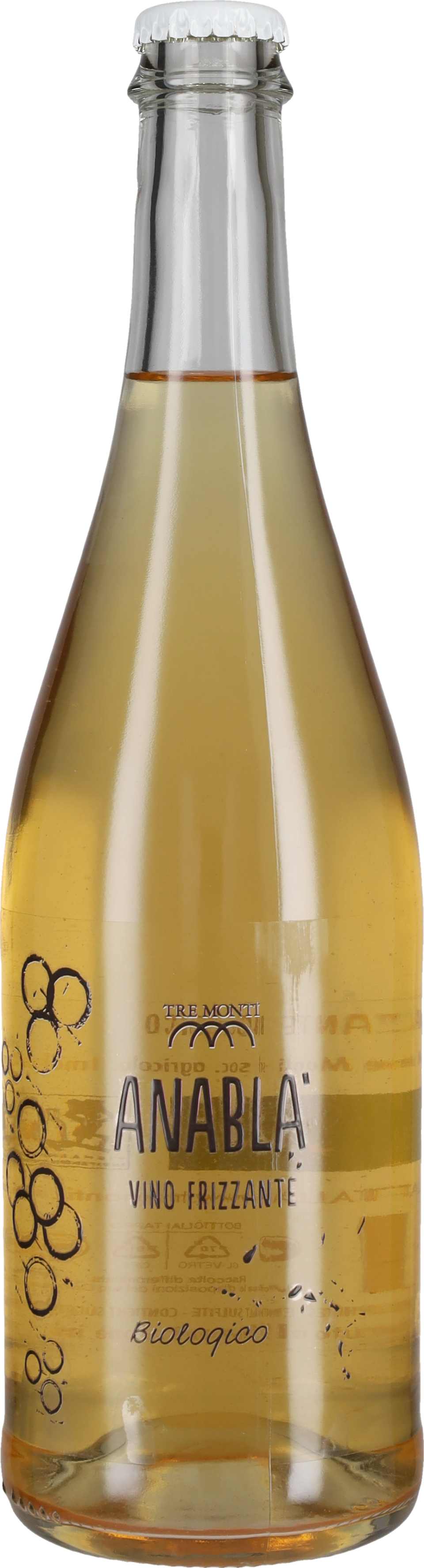
Frizzante Ancestrale 'Anablà' Tre Monti 2025“Dalbana” Tre Monti is a sparkling wine produced with spontaneous refermentation in the bottle. The Navacchia family, owners of the Tre Monti winery on the hills of Imola, works in respect of the fruit, implementing all those processes aimed at translating it into expressions marked by their specific identity, a fair compromise between ancient traditions and modernity. This label is born from the desire to experiment, but also to recover the most authentic peasant traditions, such as that of refermentation in the bottle. Tre Monti “Dalbana” is produced from grapes from certified organic vineyards since 2014, located on the hills about 100 meters above sea level. A territory where the particular position of the plots and their constitution prove to be particularly suitable for white grape varieties. The harvest takes place manually in September, before full ripeness, in order to preserve all the aromaticity and freshness of the fruit. It is vinified in white and the subsequent alcoholic fermentation takes place in steel, with refermentation spontaneous in the bottle according to the ancestral method. “Dalbana” presents itself in the glass with a pale, slightly opaque yellow color, with lively bubbles. As tradition dictates, there are some residues because the wine is not filtered and the yeasts are left in suspension. On the nose, it emits aromas of ripe yellow fruit, flowers, and bakery. On the palate, it is immediate and opens with a refreshing, lively, and satisfying taste. It undoubtedly represents one of the most lively and tantalizing expressions of Albana grapes, “the lady of Romagna”, because in its expressive immediacy it seems to embody the straightforwardness, generosity, and brilliance of the Romagnoli inhabitants.12,00 £*Shipping: 48,00 £Secure redirect to the provider
-
Albana Secco in Anfora 'Vitalba' Tre Monti 2025The Albana in Anfora “Vitalba” is a dry, full-bodied, and complex expression of the main white grape variety from Romagna, produced by the Tre Monti winery, a significant reference point for wine in the hills of Imola. This wine is made according to ancient peasant traditions, with long skin maceration to promote maximum aromatic extraction, also recovering an ancestral tradition that dates back to the origins of wine in the Middle East, concerning fermentation and aging in terracotta amphorae. The Albana “Vitalba” comes from healthy, ripe grapes from the Vigna Bacchilega, one of the oldest plots of the Tre Monti winery, whose planting dates back to 1983. The vines are trained in a head-down method, a very ancient and traditional system, and their roots rest on clayey soil. After pressing, the must is left to ferment spontaneously on the skins in Georgian terracotta amphorae called ‘kvevri’, without the inoculation of selected yeasts. To understand the uniqueness of this process, it is enough to observe how the use of ‘kvevri’ amphorae represents the oldest method of production of wine, thanks to artifacts dating back 7000 years. In this case, the maceration on the skins lasts between 80 and 120 days, after which the wine, separated from the skins, rests in amphora for another 10 months. The Albana in Anfora “Vitalba” from Tre Monti presents itself as a dry white wine rich in body, structure, and complexity, characterized by a very intense golden color and typical expressive oxidative nuances. The bouquet is extraordinarily rich, with aromas of ripe exotic fruit, dehydrated yellow fruit, and prominent aromatic herbs. The sip is warm and very consistent, supported by a lively freshness and good sapidity. The important structure and very long persistence make this wine a perfect pairing for elaborate dishes based on fish or vegetables, white meats, or moderately aged cheeses.23,00 £*Shipping: 48,00 £Secure redirect to the provider



-
What does Cuban cuisine and eating culture look like?
Cuban cuisine is a fusion of Spanish, African, and Caribbean influences, resulting in a diverse and flavorful culinary tradition. Common ingredients include rice, beans, plantains, and various meats such as pork and chicken. Popular dishes include ropa vieja (shredded beef), arroz con pollo (chicken with rice), and lechón asado (roast pork). Eating culture in Cuba is centered around family and community, with meals often being a social and communal experience. It is common for Cubans to share meals with extended family and friends, and food is an important part of social gatherings and celebrations. **
-
What is the meaning of tradition, culture, and identity?
Tradition refers to the customs, beliefs, and practices that are passed down from generation to generation within a community or society. Culture encompasses the shared values, beliefs, and behaviors of a particular group of people, including their language, art, music, and social norms. Identity is the sense of self and belonging that is shaped by one's cultural background, traditions, and experiences. Together, tradition, culture, and identity form the foundation of a person's sense of belonging and connection to their community and heritage. **
-
What are electricity and high culture history?
Electricity history refers to the development and use of electricity as a form of energy, including the discovery of electricity, the invention of electric devices, and the establishment of electrical systems. High culture history, on the other hand, refers to the history of cultural and artistic achievements that are considered to be of high quality and sophistication, such as classical music, literature, fine arts, and theater. Both electricity and high culture history have evolved over time, shaping the way we live and appreciate the world around us. **
-
What is the difference between low culture and high culture in history?
Low culture refers to the cultural activities and products that are considered to be more common, popular, and easily accessible to the general public. This can include things like popular music, television shows, and mass-produced literature. On the other hand, high culture refers to the cultural activities and products that are considered to be more refined, sophisticated, and often associated with the elite or educated classes. This can include things like classical music, fine art, and literature that is considered to be more intellectually challenging. The distinction between low and high culture has been a source of debate and has evolved over time, but it generally reflects the social and class divisions within a society. **
Do you enjoy doing handicrafts?
As an AI, I don't have personal preferences or feelings, so I don't have the capacity to enjoy doing handicrafts. However, I can provide information and guidance on various handicraft projects and techniques for those who are interested in pursuing them. Whether or not someone enjoys doing handicrafts is a personal preference and can vary from person to person. **
Does anyone still master handicrafts?
Yes, there are still people who master handicrafts. While the prevalence of mass-produced goods has reduced the demand for handmade items, there is still a market for high-quality, artisanal products. Many individuals and communities around the world continue to practice and preserve traditional handicraft techniques, passing down their skills through generations. Additionally, the rise of the maker movement and the increasing interest in sustainable and ethically-made goods has led to a renewed appreciation for handmade crafts. **
Top-Angebote
Products related to Monti:
-
'Anablà' Tre Monti 2023“Dalbana” Tre Monti is a sparkling wine produced with spontaneous refermentation in the bottle. The Navacchia family, owners of the Tre Monti winery on the hills of Imola, works with respect for the fruit, implementing all those processes aimed at translating it into expressions marked by their specific identity, a fair compromise between ancient traditions and modernity. This label was born from the desire to experiment, but also to recover the most authentic peasant traditions, such as that of refermentation in the bottle. Tre Monti “Dalbana” is produced from grapes from certified organic vineyards since 2014, located on the hills about 100 meters above sea level. A territory where the particular position of the plots and their constitution prove to be particularly suitable for white grape varieties. The harvest is done manually in September, before full ripeness, in order to preserve all the aromaticity and freshness of the fruit. It is vinified in white and the subsequent alcoholic fermentation takes place in steel, with spontaneous refermentation in the bottle according to the ancestral method.in the bottle according to the ancestral method. “Dalbana” presents itself in the glass with a pale slightly opaque yellow color, with lively bubbles. As tradition dictates, there are some residues present because the wine is not filtered and the yeasts are left in suspension. On the nose, it emits aromas of ripe yellow fruit, flowers, and bakery. On the palate, it is immediate and begins with a refreshing, lively, and satisfying taste. It undoubtedly represents one of the most lively and enticing expressions of Albana grapes, “the lady of Romagna”, because in its expressive immediacy it seems to embody the straightforwardness, generosity, and brilliance of the Romagnoli inhabitants.9,00 £*Shipping: 48,00 £Secure redirect to the provider
-
Trebbiano Macerato 'Piùttosto' Tre Monti 2025The Trebbiano Macerato “Piùttosto” by Tre Monti is a vigorous and fleshy orange wine, a true expression of the Romagna territory. The Tre Monti winery was founded in 1971, thanks to the intuition of Sergio Novacchia, who aimed to enhance a land often undervalued by mediocre interpretations, but decided from the outset not to distort the innate expressiveness of local wines. An increased awareness convinced Sergio, and consequently his sons Vittorio and David, who have firmly taken the helm of the company, to convert the entire vineyard area to organic farming, in order to preserve the vitality of the soil and plants. The cultivated varieties are obviously local, thus Sangiovese, Albana, and Trebbiano Romagnolo find ample space, the latter two enriched in some expressions by skin maceration, which imparts vigor and depth, or by aging in amphora. A solid certainty, also due to a very advantageous quality-price ratio. The wine Piùttosto is obtained from pure Trebbiano Romagnolo grapes, coming from a vineyard located at 150 meters above sea level that rests on clay and loamy soils. In vineyard, as already mentioned, follows the precepts of organic farming, while in the winery, fermentation takes place in cement tanks with skin contact for 20 days and without temperature control. The liquid ages for several months in cement tanks before bottling. The “Piùttosto” Trebbiano Macerato presents itself in the glass with an intense golden yellow hue, edged with orange shades. Intense and even aromatic nose, characterized by hints of tropical fruit, ripe peach, orange peel, honey, and raisins. The richness perceived on the nose coincides with a full and fleshy tasting, undoubtedly dominated by a soft and enveloping texture but enlivened by a vibrant saline thread. Authoritative.16,00 £*Shipping: 48,00 £Secure redirect to the provider
-
Frizzante Ancestrale 'Anablà' Tre Monti 2025“Dalbana” Tre Monti is a sparkling wine produced with spontaneous refermentation in the bottle. The Navacchia family, owners of the Tre Monti winery on the hills of Imola, works in respect of the fruit, implementing all those processes aimed at translating it into expressions marked by their specific identity, a fair compromise between ancient traditions and modernity. This label is born from the desire to experiment, but also to recover the most authentic peasant traditions, such as that of refermentation in the bottle. Tre Monti “Dalbana” is produced from grapes from certified organic vineyards since 2014, located on the hills about 100 meters above sea level. A territory where the particular position of the plots and their constitution prove to be particularly suitable for white grape varieties. The harvest takes place manually in September, before full ripeness, in order to preserve all the aromaticity and freshness of the fruit. It is vinified in white and the subsequent alcoholic fermentation takes place in steel, with refermentation spontaneous in the bottle according to the ancestral method. “Dalbana” presents itself in the glass with a pale, slightly opaque yellow color, with lively bubbles. As tradition dictates, there are some residues because the wine is not filtered and the yeasts are left in suspension. On the nose, it emits aromas of ripe yellow fruit, flowers, and bakery. On the palate, it is immediate and opens with a refreshing, lively, and satisfying taste. It undoubtedly represents one of the most lively and tantalizing expressions of Albana grapes, “the lady of Romagna”, because in its expressive immediacy it seems to embody the straightforwardness, generosity, and brilliance of the Romagnoli inhabitants.12,00 £*Shipping: 48,00 £Secure redirect to the provider
-
What do you think of Monti Wolf?
Monti Wolf is a talented musician with a unique style and a strong stage presence. His ability to blend different genres of music and create a captivating performance is impressive. His passion for music and his dedication to his craft are evident in his work, and he has the potential to make a significant impact in the music industry. **
-
What is the difference between culture and tradition?
Culture refers to the beliefs, customs, arts, and social behaviors of a particular group of people, encompassing a broader range of practices and values. On the other hand, tradition specifically refers to the customs and practices that are passed down from generation to generation within a specific community or society. While culture is more dynamic and can evolve over time, traditions tend to be more static and rooted in history and heritage. **
-
What does Cuban cuisine and eating culture look like?
Cuban cuisine is a fusion of Spanish, African, and Caribbean influences, resulting in a diverse and flavorful culinary tradition. Common ingredients include rice, beans, plantains, and various meats such as pork and chicken. Popular dishes include ropa vieja (shredded beef), arroz con pollo (chicken with rice), and lechón asado (roast pork). Eating culture in Cuba is centered around family and community, with meals often being a social and communal experience. It is common for Cubans to share meals with extended family and friends, and food is an important part of social gatherings and celebrations. **
-
What is the meaning of tradition, culture, and identity?
Tradition refers to the customs, beliefs, and practices that are passed down from generation to generation within a community or society. Culture encompasses the shared values, beliefs, and behaviors of a particular group of people, including their language, art, music, and social norms. Identity is the sense of self and belonging that is shaped by one's cultural background, traditions, and experiences. Together, tradition, culture, and identity form the foundation of a person's sense of belonging and connection to their community and heritage. **
Similar search terms for Monti
-
Albana Secco in Anfora 'Vitalba' Tre Monti 2025The Albana in Anfora “Vitalba” is a dry, full-bodied, and complex expression of the main white grape variety from Romagna, produced by the Tre Monti winery, a significant reference point for wine in the hills of Imola. This wine is made according to ancient peasant traditions, with long skin maceration to promote maximum aromatic extraction, also recovering an ancestral tradition that dates back to the origins of wine in the Middle East, concerning fermentation and aging in terracotta amphorae. The Albana “Vitalba” comes from healthy, ripe grapes from the Vigna Bacchilega, one of the oldest plots of the Tre Monti winery, whose planting dates back to 1983. The vines are trained in a head-down method, a very ancient and traditional system, and their roots rest on clayey soil. After pressing, the must is left to ferment spontaneously on the skins in Georgian terracotta amphorae called ‘kvevri’, without the inoculation of selected yeasts. To understand the uniqueness of this process, it is enough to observe how the use of ‘kvevri’ amphorae represents the oldest method of production of wine, thanks to artifacts dating back 7000 years. In this case, the maceration on the skins lasts between 80 and 120 days, after which the wine, separated from the skins, rests in amphora for another 10 months. The Albana in Anfora “Vitalba” from Tre Monti presents itself as a dry white wine rich in body, structure, and complexity, characterized by a very intense golden color and typical expressive oxidative nuances. The bouquet is extraordinarily rich, with aromas of ripe exotic fruit, dehydrated yellow fruit, and prominent aromatic herbs. The sip is warm and very consistent, supported by a lively freshness and good sapidity. The important structure and very long persistence make this wine a perfect pairing for elaborate dishes based on fish or vegetables, white meats, or moderately aged cheeses.23,00 £*Shipping: 48,00 £Secure redirect to the provider
-
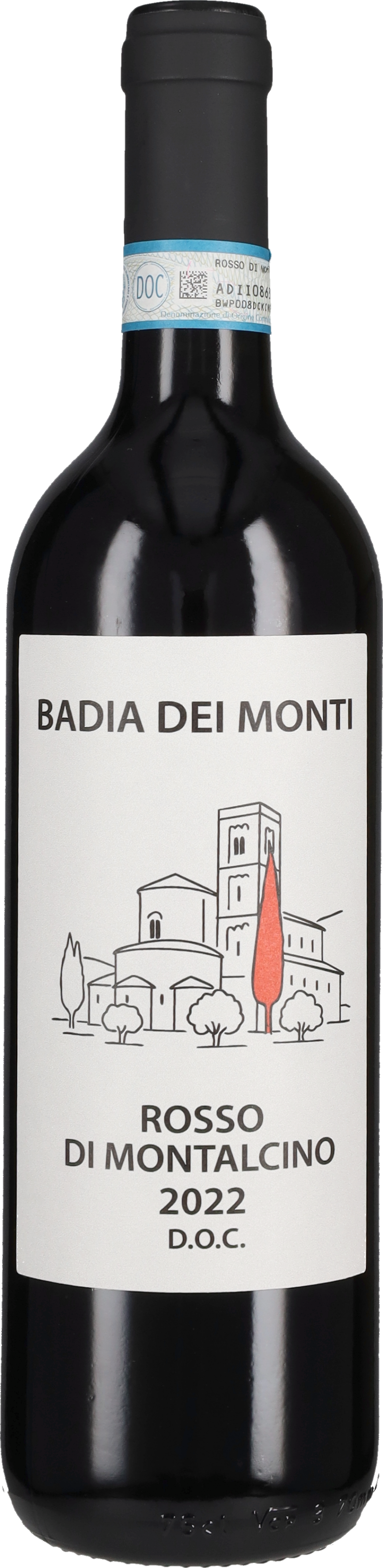
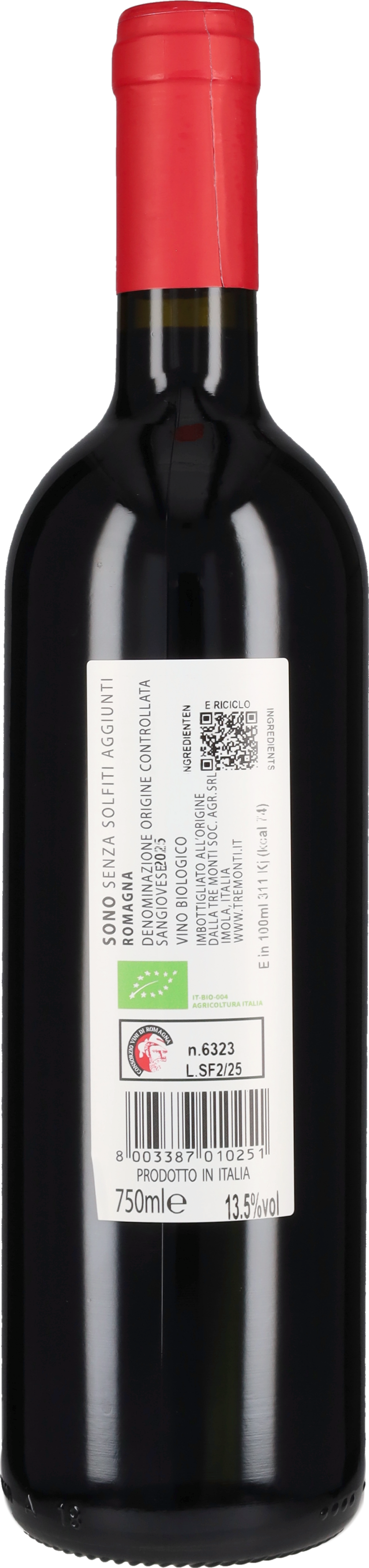
Sangiovese di Romagna Superiore 'Sono' Tre Monti 2025The Sangiovese di Romagna Superiore “Sono” from the Tre Monti winery is a dynamic and expressive red produced in Imola, in the province of Bologna, in Emilia-Romagna. This label is made from pure Sangiovese grapes sourced from the Casa vineyard, whose vines, about 25 years old, are cultivated using the double curtain trellising method on gentle hills located at 150 meters above sea level, characterized by medium-textured soils with clayey-silty compositions. The winery, founded by Sergio Navacchia, who still closely supervises his children's activities, owns about 55 hectares and represents one of the most solid realities in the area, capable of producing unique and interesting territorial expressions also thanks to the conversion to organic farming that began in 2011. The “Sono” Sangiovese Superiore di Romagna is produced with carefully selected and hand-harvested grapes towards the end of September. The clusters, brought to the winery, are gently destemmed and crushed before undergoing alcoholic fermentation in containers of stainless steel at controlled temperature with a maceration on the skins of about 8 days. The wine is then racked with pressing of the skins, after which it remains in aging in stainless steel tanks for at least 5 months before being bottled without the addition of sulfites. The Sangiovese di Romagna Superiore “Sono” from Tre Monti presents itself with an intense ruby red color with slight violet reflections. On the nose, intense aromas of red fruit and berries emerge, including cherry, blackberry, raspberry, and currant, floral notes of violet and myrtle berries, spicy hints of tobacco and sweet spices, finishing with slight hints of wet earth. On the palate, it is round, enveloping, warm, and generous, endowed with good freshness and dense, well-present tannins. This Tre Monti wine is a pleasant and drinkable Sangiovese di Romagna, made with organic methods and without added sulfites.12,00 £*Shipping: 48,00 £Secure redirect to the provider
-
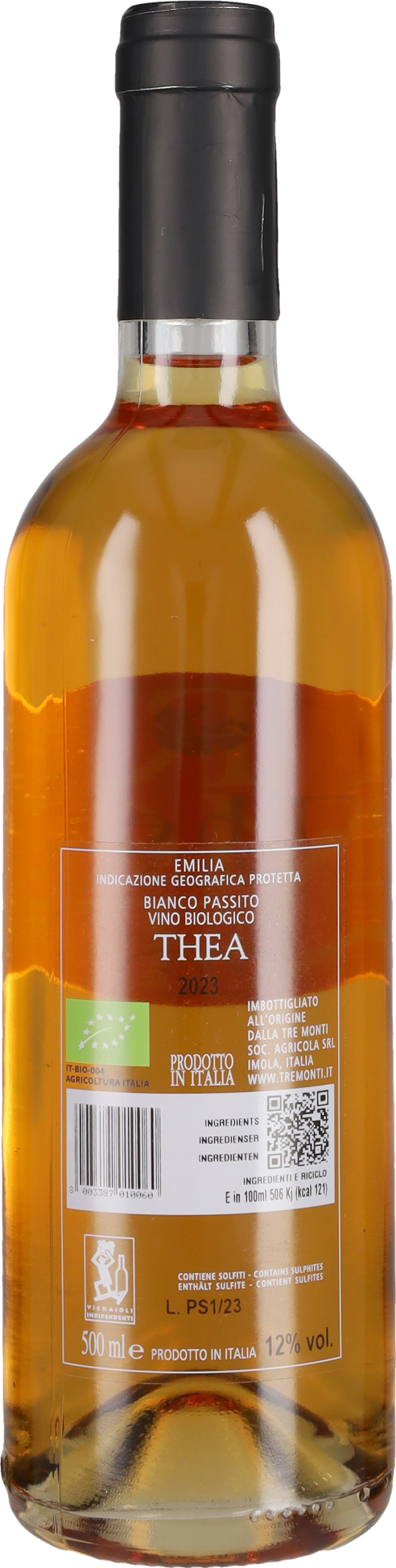
Albana di Romagna Passito 'Thea' Tre Monti 2023 - 50clThe Passito “Thea” Tre Monti is a dessert wine produced with an ancient indigenous white grape variety. The Albana has been cultivated for centuries in the lands of Romagna, so much so that the white wines of the area were already appreciated by the Roman Empress Galla Placidia, daughter of Theodosius. It is a sweet wine that is vinified, partly in steel and partly in wood, and represents one of the best excellences of the region. A wine that conquers and seduces with its soft seductive notes and its velvety, rich, and intense sip. It is excellent to taste with dry pastries, with almond paste, or to pair with a platter of blue cheeses or aged cheeses.The Passito “Thea” wine is a wine from Romagna produced by one of the most important realities of the territory. The Tre Monti Winery is located in the province of Imola, in the first hilly area that rises towards the Apennine hinterland. The estate is divided into two plots: Serra, characterized by light clay soils, particularly suited for white grape varieties, and Oriolo with sandy, pebbly, and dark clay soils, where Sangiovese finds its home. Since 2011, the vineyards have been managed under a regime of organic farming, in full respect of the environment and the surrounding nature. The Albana vines are over 20 years old and to produce the passito, half of the grapes are harvested late and the other half is dried on racks for about 30 days. The fermentations take place in steel and the wine ages for 4 months in barrique and for 24 months in steel before being bottled.The Passito “Thea” produced by the Forlì winery Tre Monti is a pure Albana, vinified sweet. It is a refined and elegant dessert wine that expresses great harmony and can be counted among the best expressions of the type. In the glass, it presents itself with a bright golden yellow color. The bouquet is very rich and broad, with aromas of yellow fruit, candied citrus peel, dried fruit, raisins, hints of orange honey, and fresh almond. On the palate, it has a soft, warm, and seductive entry, with a sweet, rich, and elegant mid-palate. The finish is very persistent and has good freshness, which gives balance to the sip.21,00 £*Shipping: 48,00 £Secure redirect to the provider
-
What are electricity and high culture history?
Electricity history refers to the development and use of electricity as a form of energy, including the discovery of electricity, the invention of electric devices, and the establishment of electrical systems. High culture history, on the other hand, refers to the history of cultural and artistic achievements that are considered to be of high quality and sophistication, such as classical music, literature, fine arts, and theater. Both electricity and high culture history have evolved over time, shaping the way we live and appreciate the world around us. **
-
What is the difference between low culture and high culture in history?
Low culture refers to the cultural activities and products that are considered to be more common, popular, and easily accessible to the general public. This can include things like popular music, television shows, and mass-produced literature. On the other hand, high culture refers to the cultural activities and products that are considered to be more refined, sophisticated, and often associated with the elite or educated classes. This can include things like classical music, fine art, and literature that is considered to be more intellectually challenging. The distinction between low and high culture has been a source of debate and has evolved over time, but it generally reflects the social and class divisions within a society. **
-
Do you enjoy doing handicrafts?
As an AI, I don't have personal preferences or feelings, so I don't have the capacity to enjoy doing handicrafts. However, I can provide information and guidance on various handicraft projects and techniques for those who are interested in pursuing them. Whether or not someone enjoys doing handicrafts is a personal preference and can vary from person to person. **
-
Does anyone still master handicrafts?
Yes, there are still people who master handicrafts. While the prevalence of mass-produced goods has reduced the demand for handmade items, there is still a market for high-quality, artisanal products. Many individuals and communities around the world continue to practice and preserve traditional handicraft techniques, passing down their skills through generations. Additionally, the rise of the maker movement and the increasing interest in sustainable and ethically-made goods has led to a renewed appreciation for handmade crafts. **
* All prices are inclusive of VAT and, if applicable, plus shipping costs. The offer information is based on the details provided by the respective shop and is updated through automated processes. Real-time updates do not occur, so deviations can occur in individual cases. ** Note: Parts of this content were created by AI.